
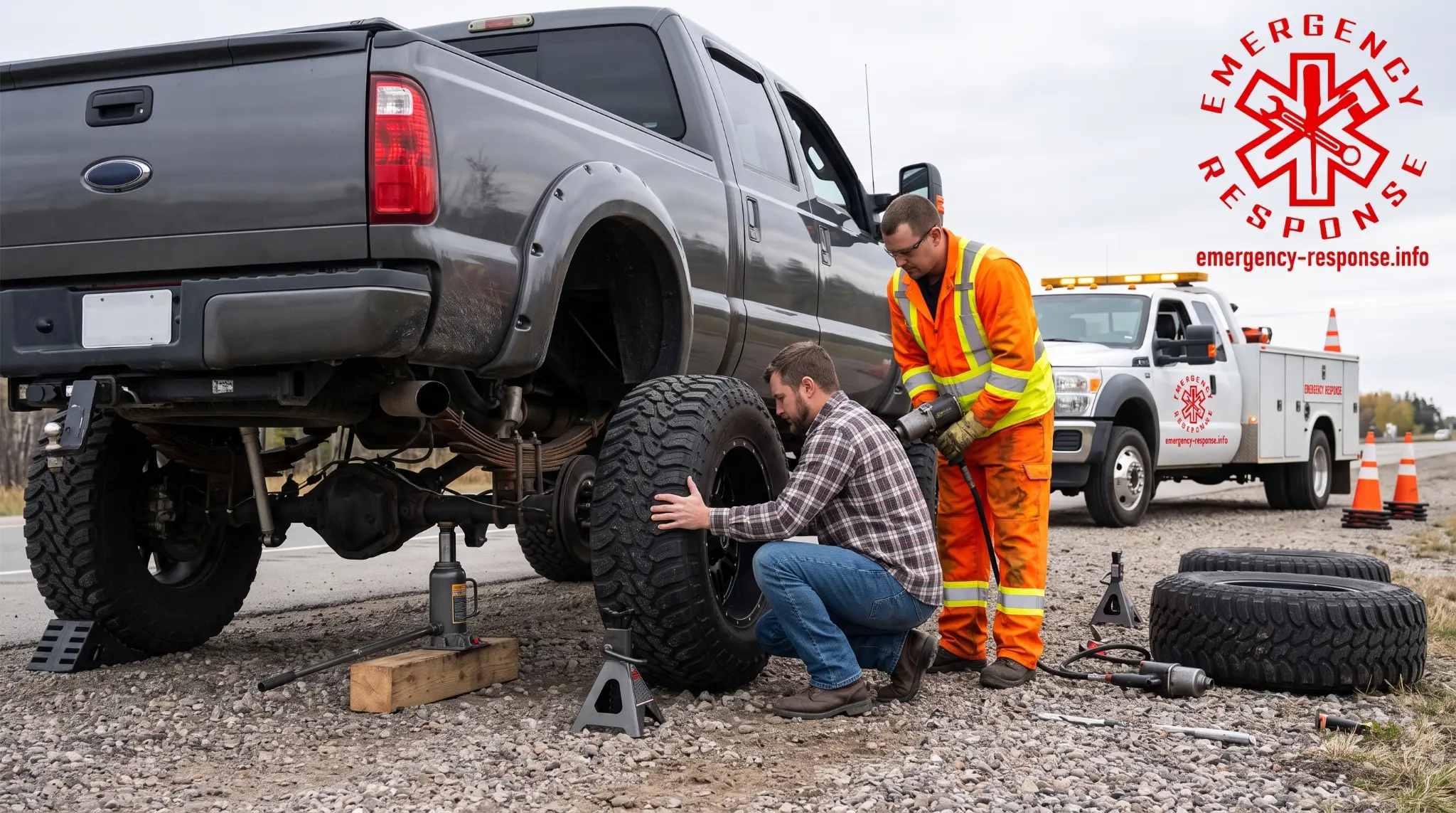
This minor problem may turn the entire journey into a very fearful one. Matters will be complicated further if you happen to have a lifted truck. This is because how to change a tire on lifted truck is elevated to high levels such that the jack provided for the truck may not have the capacity to elevate the vehicle to the required position. The other thing is that the new tire is heavier than an ordinary tire on a standard truck. It therefore follows that safety is very important before carrying out any work on the wheels.
Why a Lifted Truck Needs Extra Care
Lifting a vehicle requires extra precautions that go beyond standard pickup maintenance. Because of the increased ground clearance, the distance between the tire and the road changes significantly. Depending on your specific suspension modifications, the vehicle’s safe lifting points may also be altered.
This means a standard factory jack might not have the height or reach required to safely raise the vehicle. While your owner’s manual remains the best authority on baseline factory specifications, specialized Lifted Truck Tire Repair Services and heavy-duty equipment are often necessary to perform tire changes safely and effectively on modified trucks.
Equipment Needed for a Safe Tire Change
Good equipment will definitely make the process of changing the tires safer. It is essential to note that the jack should be capable of lifting the truck and be able to lift to the required height. It is important to use the equipment which meets the needs of the car manufacturer. The jack provided by the factory might not work properly following the installation of the lift kit.
The equipment can include:
- Proper jack
- Proper spare tire
- Gloves and flashlights
- Strong ground
A full-sized spare tire can weigh much more compared to a temporary spare tire. For this reason, the wheel should be handled with care. That means how to jack up a lifted truck is dependent on the particular truck and lift used.
Preparing the Truck Before Lifting
A stable working space is crucial in providing a safe environment for tire changes. In the best case scenario, the truck should be parked in an even area, free from traffic. An emergency situation by the road may introduce extra safety hazards especially in highways or small roadsides.
Flashing lights may come handy to increase visibility in case of emergency breakdown. In addition, the spare tire and all the tools needed to replace the tire must be easily accessible prior to removing the wheel.
Understanding Jack Placement on a Lifted Truck
Correct jack placement is one of the most important parts of a lifted truck tire change. The jack should contact a manufacturer-approved lifting point or a point specifically approved by the lift-kit manufacturer. The bumper, body panels, suspension arms, or random frame locations should not be treated as safe alternatives.
Lifted trucks can have modified suspension components, altered control arms, or aftermarket bump stops. Therefore, the correct contact point can vary between vehicles. The question of how to jack up a lifted truck cannot have one universal answer. Truck model, suspension design, axle type, and lift components all matter.
Removing the Flat Tire and Wheel
However, after ensuring that the truck is safely placed, the wheel nuts would usually come next before releasing the tire from the ground. Slightly undoing the wheel nuts as the wheel rests on the ground will also prevent it from spinning.
The lug nuts should now be undone, and the wheel can be carefully taken off. The tires for large trucks are quite heavy, so it is essential to handle them properly. It will be helpful to avoid putting fingers into pinch points. When how to change a flat tire on a lifted truck becomes difficult because of wheel weight or limited equipment, roadside assistance can be safer than attempting the job alone.
Installing the Replacement Tire
Replacement of tires should consider the tire size, load rating, and other factors that suit the vehicle. If the spare is not suitable for the truck, it could lead to problems in handling and braking of the vehicle.
It is vital for the wheel mounting surface to have no visible dirt or debris before mounting.
The wheel needs to align correctly with its mounting surface. The lug nuts need to be fastened initially by hand to prevent cross threading. Tire clearance is also another factor that requires consideration during lifted truck tire replacement.
Lowering the Truck and Checking Lug Nut Torque
When the new wheel is in place, the truck can now be lowered with caution following the jack instructions recommended by the truck manufacturer. The truck must have gotten back to firm ground before the lug nuts are checked for torque.
The torque wrench must be adjusted to the specified amount by the manufacturer of the vehicle. The values may differ from one truck make and model to another and from one wheel to another. So, guessing the torque value is not advisable. A lifted truck tire change is not complete when the truck touches the ground again.
What to Check Before Driving Again
The new tire must not be considered a final solution. Tire pressure needs to be addressed prior to resuming regular driving for the truck. It is supposed to be at the recommended level for the vehicle. An after-market suspension truck is a particular case which needs more focus. Possible changes in the ride height could influence alignment, tire wear, and clearances.
Larger lifted trucks are worth getting professionally checked if they suffer from major tire damage. It will be especially helpful if the problem with the tire was caused by an impact, damaged suspension, or any other incident on the road.
A Safer Approach to Unexpected Tire Problems
Knowing how to change a tire on lifted truck can make an unexpected breakdown less stressful. However, safety should always come before convenience. A lifted truck’s height, weight, and aftermarket parts can change the normal tire-changing process.
When conditions are unsafe or equipment is unsuitable, professional assistance can prevent a roadside problem from becoming an injury. Emergency Response also matters when a disabled truck is stopped near traffic or in another hazardous location. A calm assessment of the situation can help determine whether a tire change is practical or whether professional roadside support is the better choice.
FAQs
1. Can a regular jack lift a lifted truck?
It depends on the truck and lift height. A factory jack may not provide enough reach after modifications. The jack must have suitable capacity and reach for the vehicle.
2. What is the safest way to change a lifted truck tire?
The safest approach involves firm ground, the correct lifting point, suitable equipment, and the manufacturer’s procedures. No person should work beneath a truck supported only by a jack.
3. Does a lifted truck need a special jack?
Some lifted trucks do require equipment with greater reach or capacity. The correct choice depends on the truck’s weight, lift height, suspension design, and manufacturer requirements.
4. How often should lug nuts be checked after changing a tire?
The vehicle manufacturer’s instructions should determine the required follow-up. Some manufacturers specify a recheck after driving a certain distance.
5. Can a larger spare tire be used on a lifted truck?
Only when the tire meets the vehicle’s required specifications and is compatible with the truck. Tire size, load rating, wheel fitment, and clearance all matter.